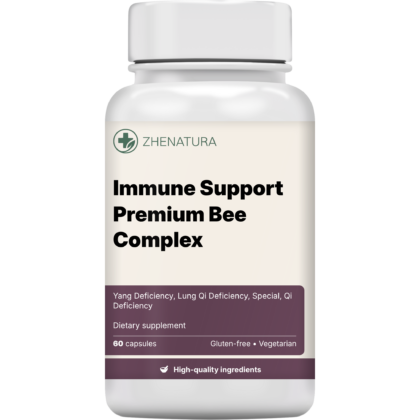
Fēng jiāo
Bee Propolis – Natural resin supporting immunity and tissue repair
Bee propolis (often called bee glue) is a resinous, sticky substance created by honeybees when they mix their saliva and beeswax with exudates gathered from tree buds, sap, and bark. Bees utilize it to seal small gaps in the hive and to protect the colony from the elements, predators, and pathogens. In dietary supplements and topical treatments, propolis is highly valued for its potent antimicrobial, anti-inflammatory, and antioxidant properties, making it an excellent aid for the immune system, oral health, and skin repair as part of a balanced lifestyle.
Characteristics, Origin, and Composition
Propolis deposit and a bee on a wooden surface within a beehive.
Bees forage resins from various plants (predominantly poplar trees in temperate climates) to produce propolis. The resulting product is a complex, typically dark brown or greenish mixture comprising approximately 50% resins, 30% waxes, 10% essential oils, 5% pollen, and 5% other organic compounds. While the exact chemical composition varies based on geographic location and local flora, propolis consistently features a rich profile of bioactive compounds, particularly polyphenols like flavonoids. These compounds provide propolis with its remarkable ability to inhibit the growth of bacteria (especially Gram-positive strains), viruses, and fungi (such as Candida species). Within the hive, it acts so effectively as an antimicrobial sealant that bees use it to “mummify” the carcasses of intruders too large to remove, preventing putrefaction.
Use in Dietary Supplements
Bee propolis is consumed and applied in various forms, including capsules, chewable tablets, liquid extracts (tinctures), and ointments:
-
Immune Support: Used as a natural remedy to help prevent and treat cold syndromes and upper respiratory tract infections, owing to its antiviral and antibacterial actions.
-
Oral and Dental Health: Added to mouthwashes, toothpastes, or applied directly via tincture, as it has been shown to reduce dental plaque and inhibit the bacteria (Streptococcus mutans) responsible for dental caries and gingivitis.
-
Wound Healing and Skin Care: When applied topically, it accelerates the healing of minor burns, wounds, acne, and cold sores (herpes simplex) by promoting cell regeneration and reducing inflammation.
-
General Antioxidant Protection: Provides a dense source of antioxidants to combat oxidative stress and protect cells from free radical damage.
Everyday Use and Well-Being
Propolis can be easily incorporated into daily routines as a supplement or used as a targeted remedy for a sore throat or minor skin abrasions. Dietary supplements do not replace proper nutrition or medical treatment. While generally safe for most people, extreme caution is necessary for individuals with known allergies to bee products (like honey or pollen) or specific tree resins, as propolis can trigger allergic reactions (including contact dermatitis when applied topically). Furthermore, individuals with asthma and women who are pregnant or breastfeeding should consult a healthcare professional before use.