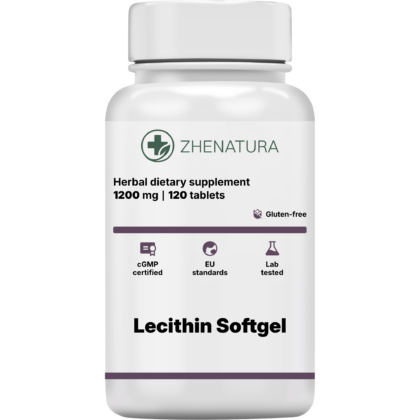
Lecithin – Natural phospholipid mixture in foods and dietary supplementsLecithin is a collective term for a mixture of phospholipids and related fatty substances that occur naturally in soybeans, sunflower seeds, egg yolk, and other plant and animal sources. It is a fat‑/phospholipid‑based ingredient, not a herb. In foods and dietary supplements, lecithin is mainly used as an emulsifier and texturiser, and in some supplements it also serves as a carrier for fat‑soluble nutrients or as a source of phosphatidylcholine and other phospholipids.Origin, characteristics, and compositionIndustrially, lecithin is usually obtained from vegetable oils (such as soy or sunflower oil) or from eggs. During oil refining, the phospholipid‑rich fraction is separated, purified, and dried to yield a viscous material, granules, or powder. Lecithin typically consists of phospholipids such as phosphatidylcholine, phosphatidylethanolamine, and phosphatidylinositol, together with triglycerides and minor accompanying components. The exact profile depends on the source and processing method. Supplement and functional food labels often specify whether the lecithin is derived from soy, sunflower, or other sources, which is important information for people with allergies or dietary preferences.Role in dietary supplements and product formulationIn dietary supplements, lecithin can play several roles:As an emulsifier, helping to stabilise mixtures of oil and water phases in liquids and reconstitutable powders.As a carrier for fat‑soluble vitamins and other lipophilic actives, promoting even distribution within a product.As a structuring agent in tablets, capsules, bars, and powdered blends.There are also products where lecithin or phosphatidylcholine itself is the main nutritional component (for example soy lecithin granules), in which case the amount per serving is declared, but the product still remains a food supplement rather than a medicine.Use, labelling, and practical considerationsOn labels, lecithin may appear as “lecithin”, “soy lecithin”, “sunflower lecithin”, or via an additive code such as E322, depending on the category and country. In supplements, it is listed among the ingredients; when lecithin is a key nutritional component, a per‑serving amount is usually stated as well. Lecithin from soy or egg is generally well tolerated, but people with known soy or egg allergy should pay close attention to the declared source. Those with specific medical conditions, allergies, or complex supplement regimens are advised to discuss their use with a doctor or dietitian if they are unsure.Everyday use and place in a healthy lifestyleLecithin mainly contributes phospholipids and fats and often serves a technological function in supplements. It does not replace a varied intake of dietary fats from everyday foods or any prescribed medical treatment. Products containing lecithin fit best within an overall balanced diet and healthy lifestyle, and anyone with ongoing health complaints should seek professional medical advice rather than relying solely on supplements.