Qu Mai
Fringed pink (Qu Mai) – The Herb Used in Traditional Systems to Support Normal Urine Elimination and Damp-Heat Relief
Fringed pink (Qu-mai), also known as “Dianthus” or “Fringed Pink,” is the traditional Chinese name for the dried aerial parts of Dianthus superbus (or Dianthus chinensis), a bitter, cold herb from the pink family that has been part of traditional Chinese herbal systems for over 2000 years. This cold, bitter herb is particularly known for its ability to promote normal urine production, eliminate normal damp-heat, relieve normal urinary discomfort, support normal menstruation and promote normal digestion – making it an ideal choice for people with a tendency toward normal urinary tract infections, normal pain with urination (dysuria), normal urine stasis and normal fluid accumulation.
Traditional Understanding in TCM Systems
Within traditional Chinese medicine, fringed pink (Qu-mai) is described as a cold, bitter herb with fluid-draining character. In the TCM theoretical framework, it acts on the so‑called Bladder, Heart and Small Intestine meridians. According to this traditional description, fringed pink (Qu-mai) specializes in normal “urine production promotion,” helps “eliminate normal damp-heat,” “relieves normal pain with urination” and “supports normal menstruation” – crucial TCM concepts for normal urinary health and normal fluid balance.
Fringed pink (Qu-mai) is seen in TCM as a classical “urine eliminator and damp-heat clarifier” – one of the most important herbs for normal urinary health. It is traditionally used to promote normal urine production, support normal urinary comfort, ease normal dysuria (pain with urination), support normal menstruation and regulate normal fluid accumulation.
Special Property: Cold and Directly Urine-Promoting
Fringed pink (Qu-mai) distinguishes itself by its cold nature and very direct “urine-promoting” effect. This character means it effectively addresses normal damp-heat accumulation and fluid stasis patterns without vigorous stimulation.
Botanical Composition and Research
Fringed pink (Qu-mai) contains over 100 bioactive compounds, of which the main ones are:
-
Triterpenoid saponins (dianosides A–I, dianthosaponins – characteristic components)
-
Dianthramides (cyclopeptides)
-
Flavonoids (diosmetin, quercetin, kaempferol)
-
Coumarins
-
Phenylacetates and phenylpropanoates (4-hydroxybenzenacetic acid, 4-methoxybenzenacetic acid)
-
Polysaccharides
Modern scientific research shows that fringed pink (Qu-mai) components can offer diverse benefits:
-
Normal urine production promotion: Studies show that certain components can increase normal urine capacity and support normal kidney function – the classical diuretic action in TCM terms.
-
Anti-inflammatory action: Saponins and flavonoids can help maintain normal inflammation balance in urinary tracts.
-
Antioxidant activity: Flavonoids and phenolic components possess strong free-radical-fighting action – protection against oxidative stress in urinary tissue.
-
Antimicrobial potential: Studies show that certain components can have antimicrobial activity against certain bacteria – likely why traditionally used for urinary tract infection symptoms.
-
Neuroprotective action: Phenylacetates can have neuroprotective effects against glutamate toxicity.
-
Normal menstruation support: Traditionally used to support normal menstruation, especially when blood stasis is present.
-
Normal digestion support: Can support normal digestive function.
Traditional Applications – TCM Context
In traditional TCM formulas, fringed pink (Qu-mai) is classically used in situations described as:
-
Normal dysuria (pain or burning with urination) with damp-heat character
-
Normal urine stasis or normal difficult urination
-
Normal urinary tract infection symptoms (cystitis-like symptoms)
-
Normal dark or turbid urine
-
Normal bloody urine with damp-heat character
-
Normal irregular menstruation or amenorrhea with blood stasis character
-
Normal fluid accumulation or normal edema
-
Normal constipation or normal food stagnation
-
Normal abdominal pain related to fluid accumulation
-
Normal fever symptoms with damp-heat character
These are traditionalist descriptions that form part of the TCM thinking system and must not be equated with medical diagnoses in the sense of European medicinal product law.
Cold and Urine-Promoting Character
Fringed pink (Qu-mai) is traditionally seen as a “cold” and “urine-promoting” herb – which effectively addresses normal damp-heat patterns and promotes normal urine production. This makes it particularly suitable for people with a tendency toward normal urinary discomfort.
Classical Formula: Ba Zheng San
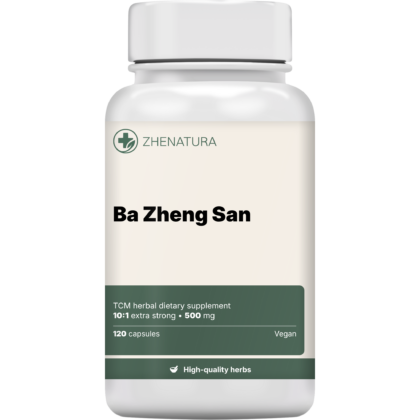
A very famous classical application is in the formula “Ba Zheng San” (Eight Herb Drain Dampness Formula), traditionally used for over 900 years for normal dysuria and normal damp-heat in bladder. This very famous formula contains fringed pink (Qu-mai) as a core ingredient (9g), combined with Bian Xu, Che Qian Zi, Hua Shi, Shan Zhi Zi, Da Huang, Gan Cao and Mutong.
Other Classical Formulas:
-
San Jin Pai Shi Tang: for normal urinary stone problems with damp-heat character
-
Zhu Ling Tang: complementary for normal damp elimination
Preparation and Dosage
Fringed pink (Qu-mai) is traditionally:
-
Built into formulas (classically Ba Zheng San: 9g)
-
Traditional dosage: 6–12g per formula
-
Used as tea ingredient in formulas
CAUTION: NOT FOR PREGNANCY OR KIDNEY DEFICIENCY
Fringed pink (Qu-mai) must NOT be used by:
-
Pregnant women (can have uterus effect)
-
Individuals with Kidney deficiency or kidney insufficiency (without professional guidance)
-
Individuals with persistent diarrhea
-
Individuals on certain diuretics without professional supervision
Seasonality and Daily Use
Fringed pink (Qu-mai) is traditionally used especially during warm seasons or with normal damp-heat symptoms. It is NOT suitable for long-term independent daily use without professional supervision.
Well-being and Daily Use
Fringed pink (Qu-mai) is valued by modern users as part of professional TCM formulas for normal urinary health, normal damp elimination and normal menstruation management. This herb is NOT suitable for independent daily standalone use without professional guidance.
Many users see fringed pink (Qu-mai) as part of professional TCM formulas for urinary health – as a cooling, urine-promoting element for normal health, ALWAYS under the guidance of a qualified TCM doctor.
Very Safe Profile (In Professional Formulas)
Fringed pink (Qu-mai) is known as one of the safest urine-promoting herbs in TCM. It has minimal toxicity and is widely used in professional TCM for adults (not for pregnant women).
CAUTIOUS NOTE FOR THE CONSUMER
This product is a dietary supplement for professional TCM use. TCM terms such as Urine Elimination Promotion, Damp-Heat Clearance, Normal Urinary Health are system concepts that form part of a traditional thinking system and must not be directly equated with anatomical structures or disease explanations in modern medicine.
If you have persistent urinary symptoms, severe dysuria or normal urine stasis problems, you should always consult a qualified TCM doctor or medical expert BEFORE using this herb in formulas.