Main benefits
  • Pattern identification: Traditionally used for the TCM pattern of Blood deficiency with concurrent Blood stasis, especially in the context of gynecology, where there is both lack of sufficient new Blood and obstruction of Blood flow in the Chong and Ren channels.

  • Name and core idea: [translate:桃红四物汤] means “Four‑Substance Decoction with Peach and Safflower.” It is a modification of Si Wu Tang (Four Substances Decoction) that adds Blood‑invigorating herbs to the classic Blood‑tonifying base, so it both nourishes and moves Blood.

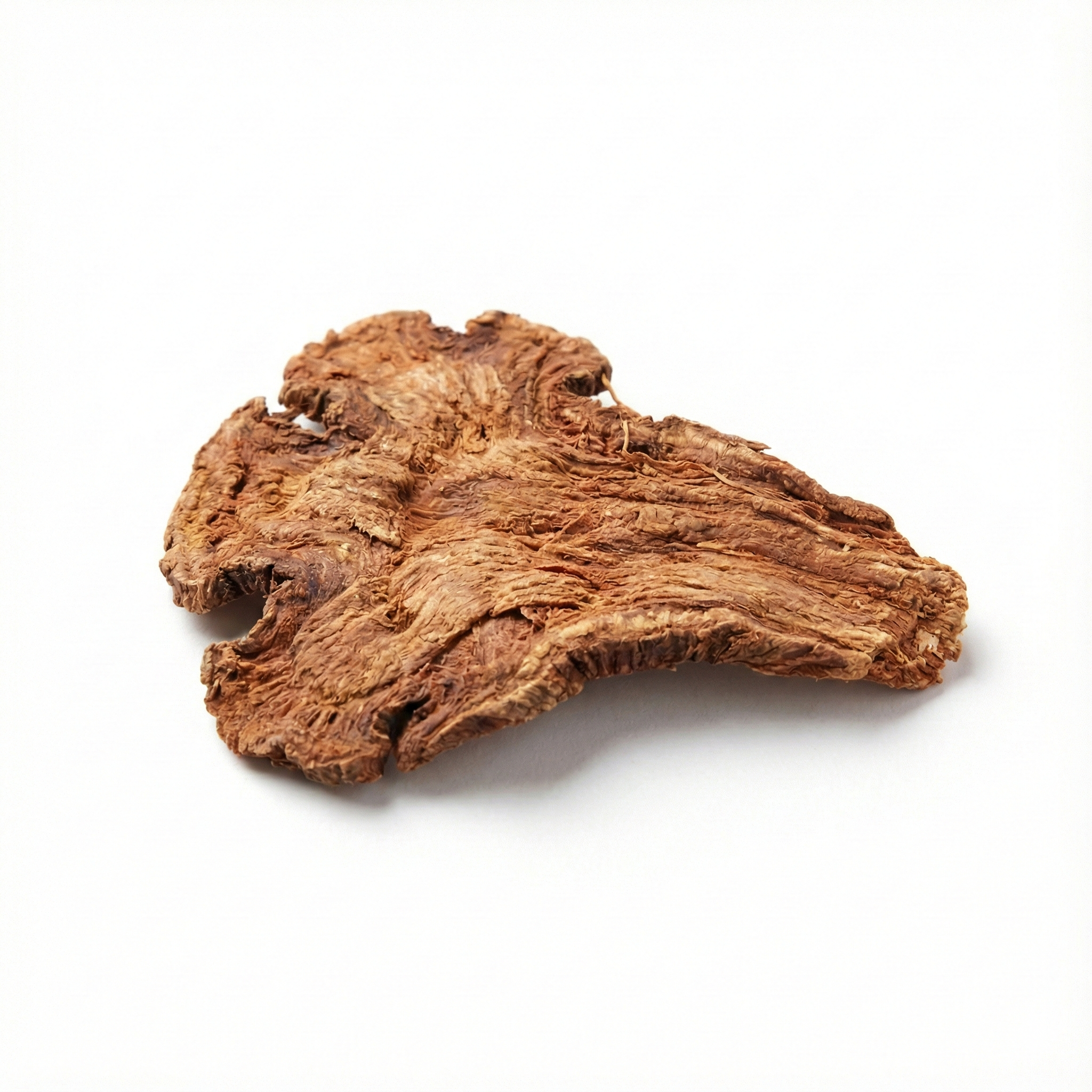
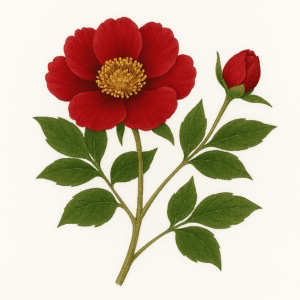
  • Blood‑tonifying base (Si Wu Tang): Shu Di Huang (Prepared Rehmannia): Strongly nourishes Liver and Kidney Blood/Yin. Dang Gui (Angelica sinensis): Tonifies and moves Blood, regulates the menses. Bai Shao (White Peony): Nourishes Blood and softens the Liver. Chuan Xiong: Invigorates Blood and moves Qi, guiding the formula to the Blood level and to the head and channels

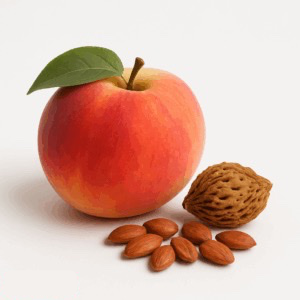
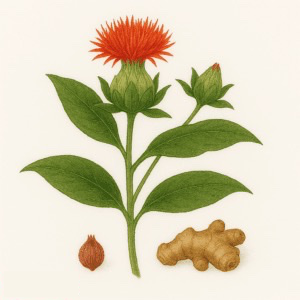
  • Blood‑invigorating additions: The “Tao Hong” part refers to: Tao Ren (Peach Kernel): Breaks up Blood stasis and moistens the Intestines and Hong Hua (Safflower): Invigorates Blood, disperses stasis, and unblocks menses in classical descriptions. Together they strengthen the formula’s ability to remove congealed Blood while the original four herbs build fresh Blood.

  • Gynecological focus: In traditional gynecology, this pattern is associated with irregular or painful menstruation characterized in TCM terms by Blood deficiency with stasis, for example, dull plus stabbing pain, clots, and a pale but sometimes slightly dark tongue. The formula is chosen when one must “both enrich and quicken the Blood.”

  • Principle in TCM terms: The core principle is “Bu Zhong You Hou” tonification within movement: tonify and enrich the Blood so there is something to move, while also moving and breaking stasis so that the new Blood can circulate freely in the channels.

  • Classical heritage: Tao Hong Si Wu Tang is generally attributed to later refinements of the classic Si Wu Tang tradition and is widely cited in modern TCM textbooks as the standard formula when Si Wu Tang alone is too mild due to the presence of clear Blood‑stasis signs in a basically Blood‑deficient patient.


Zhenatura.com TCM: Herbal dietary supplements of Traditional Chinese Medicine origine according to European standards!

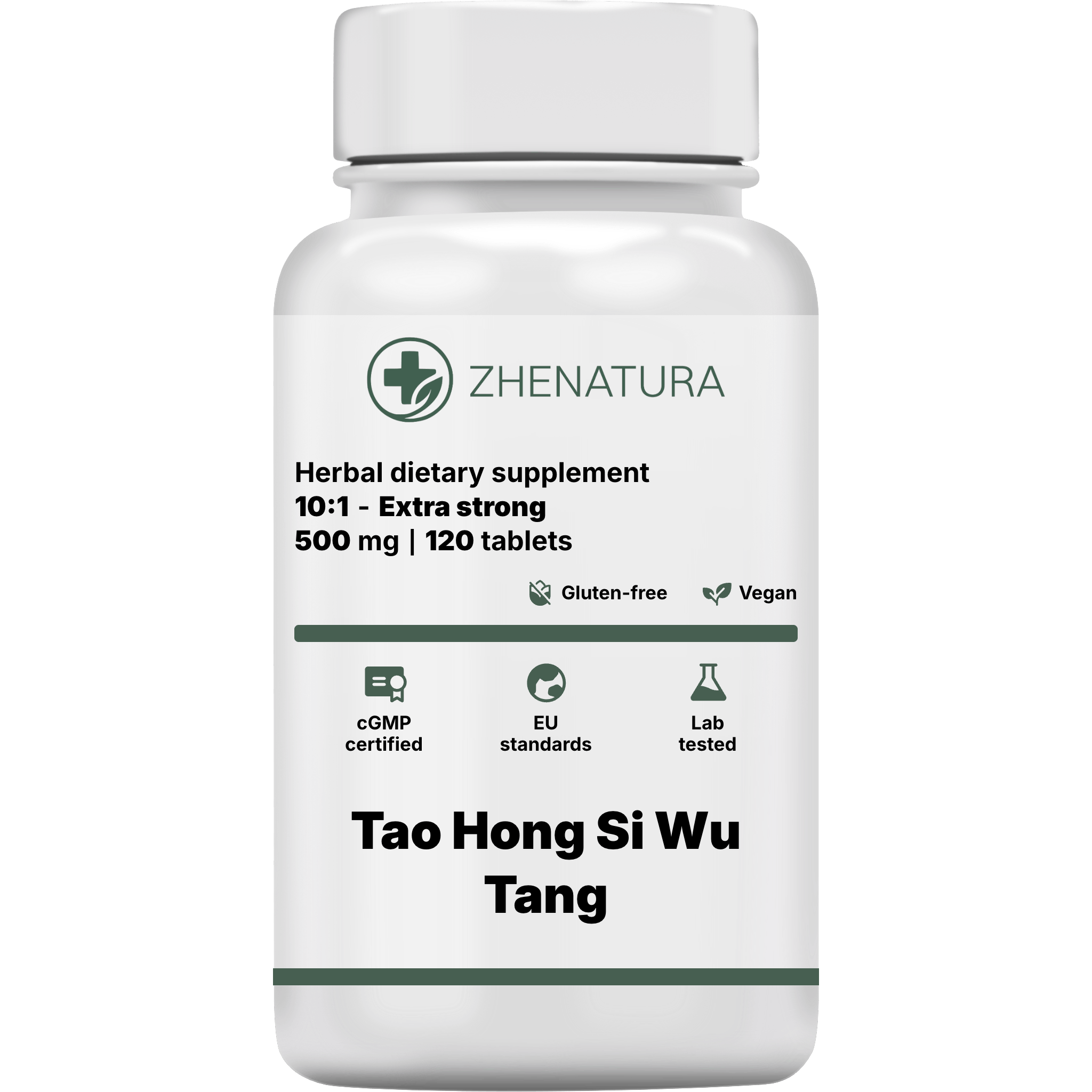
  • Strength 10:1
  • 120 tablets per bottle
  • Double or Triple the strength as regular brands
  • Less fillers and binders
  • No pharmaceuticals or dyes
  • Thorough lab testing (heavy metals, pesticides etc.)
  • Always made in controlled cGMP certified facility
  • Unbeatable value
  • European brand
TCM traditional Chinese Patents do not work immediate, it takes some time before you (and your organs) will experiences the benefits. We advice always to use minimum 1 packing and then evaluate with your prescriber!
This product is a dietary (food) supplement, to be taken as directed by a qualified practitioner. It is not intended to treat, cure, diagnose or prevent any disease. Not to replace a varied diet. Not to be taken if nursing or if pregnant. Not to be consumed continuously for longer than 3 months.

Common uses

This content is only visible to logged in users. Log in to view.


Information for professionals

This content is only visible to logged in users. Log in to view.
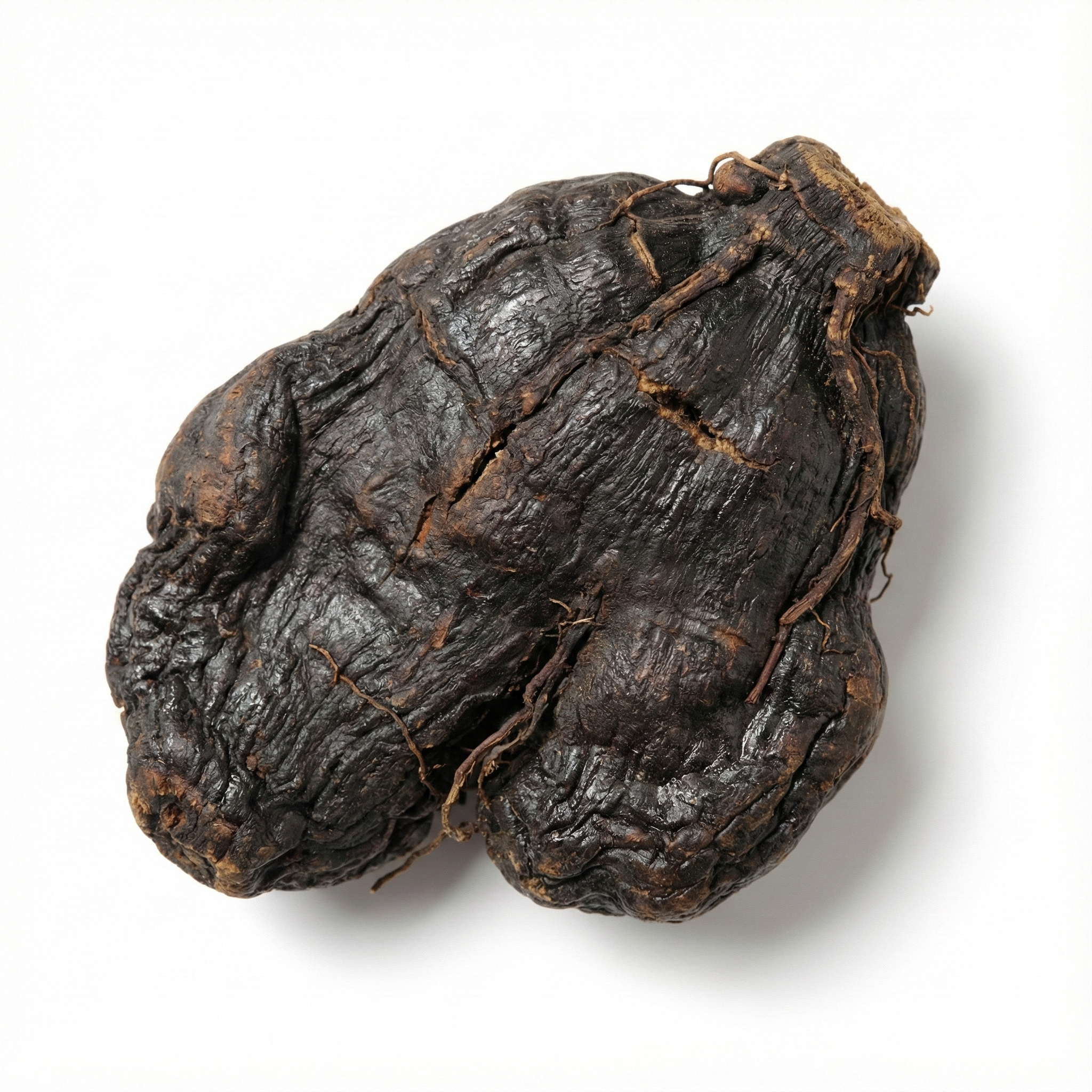
Zhenatura Tao Hong Si Wu Tang Extra Strong is based on the classical Tao Hong Si Wu Tang, a development of Si Wu Tang that first appeared in later Song–Yuan‑era texts. In the context of traditional Chinese herbal literature, this specific combination of botanicals, including Rehmannia, White Peony, Angelica sinensis, Chuanxiong, Peach Kernel, and Safflower, was historically described as a method to “invigorate the Blood” and “dispel Stagnation” within the TCM theoretical framework. These descriptions belong to the traditional classification of the ingredients in TCM and do not refer to modern anatomy, circulatory systems, or verified physiological effects.

1
Gynecological Disorders (Primary Dysmenorrhea)
https://terra-docs.s3.us-east-2.amazonaws.com/IJHSR/Articles/volume5-issue7/IJHSR_2023_57_100.pdf

Please note: This summary is a concise interpretation of the original article; please refer to the source for the full context and details.

Multiple clinical studies in China have reported that Tao Hong Si Wu Tang (THSWT) and its modifications are effective for treating primary dysmenorrhea. These studies, often involving dozens to hundreds of patients, consistently show significant improvement in menstrual pain and related symptoms when compared to baseline or control groups. The formula is frequently used by gynecologists for blood stasis-type dysmenorrhea and is often combined with Western medicine or adjusted according to individual symptoms.


2
Cardiovascular and Metabolic Diseases
https://pmc.ncbi.nlm.nih.gov/articles/PMC9750686/

Please note: This summary is a concise interpretation of the original article; please refer to the source for the full context and details.

Systematic review and meta-analysis (9 RCTs):

  • THSWT combined with antihypertensive drugs was more effective than antihypertensive drugs alone for hypertension with blood stasis syndrome.

  • The combination significantly reduced systolic and diastolic blood pressure, triglycerides, total cholesterol, and LDL cholesterol, while increasing HDL cholesterol.

  • The incidence of adverse reactions was also reduced in the combination group.


3
Cardiovascular protection
https://www.frontiersin.org/journals/pharmacology/articles/10.3389/fphar.2022.816347/full

Please note: This summary is a concise interpretation of the original article; please refer to the source for the full context and details.

Modern pharmacological and clinical studies demonstrate that THSWT improves hemorheology, reduces blood lipids, inhibits platelet aggregation, improves microcirculation, and exerts anti-inflammatory and anti-atherosclerotic effects.

Myocardial Injury and Angina

Clinical studies and reviews show that THSWT is effective in the prevention and treatment of myocardial injury, angina pectoris, and coronary artery disease, especially when combined with standard chemical drugs. It improves clinical symptoms, cardiac function, and laboratory markers such as blood viscosity and inflammatory cytokines.


For Tao Hong Si Wu Tang, take 3 tablets 2 times per day. These should be taken before or after meal.

Total pieces in package: 120 tablets

Dosage: 3 tablets

Frequency: 2 times a day before or after meal


Side effects

Fatigue & Weakness

Mild Digestive discomfort

Mild dizziness


Allergies

Individuals allergic to any of the herbal ingredients should avoid use. Discontinue immediately if any allergic reactions, such as rash, itching, or swelling, occur.

Asteraceae Family

Peach Kernel

Rehmannia Root Allergy

Safflower Allergy


Avoid medicine interactions

Anticoagulants or Antiplatelet Drugs

Hormonal medications

Immunosuppressants

Laxatives

NSAIDs (Ibuprofen, Aspirin, Naproxen)


Precautions

Discontinue use if allergic reaction occurs.

Consult your herbalist or physician before use if you are taking other medications or receiving other medical treatments.

Consult your herbalist or doctor before use if you have high blood pressure, or if you are children, old or very weak.

Keep out of reach of children.

Do not use in cases of heavy menstrual bleeding or any condition involving active bleeding.


Indemnification

This product is a dietary supplement, and should only be used as prescribed by a qualified acupuncturist, herbalist, phyto- or TCM therapist. This product is not intended to diagnose, treat, prevent or cure any disease. Always consult a qualified doctor or healthcare professional before using this. A healthy lifestyle is important, as is a varied, balanced diet, for which supplements are not a substitute.

TCM traditional Chinese Patents do not work immediate, it takes some time before you (and your organs) will experiences the benefits. 1 packing adviced and then evaluate with your prescriber!

Allergies

, , ,

Avoid medicine interactions

, , , ,

Formula types

Ingredients

, , , , ,

Ingredients Pinyin

, , , , ,

Original classical patents

, , ,

Original classical patents Pinyin

, , ,

Pulse diagnoses

,

Side effects

, ,

Symptoms (for reference only)

, , , , , ,

TCM constitutions

, , ,

TCM patterns

,

Tongue diagnoses

, , ,