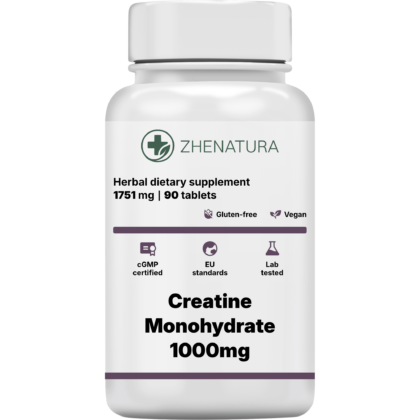
Titanium-Free Coating – Functional tablet coating for protection, appearance, and swallowability
A titanium-free coating is not a primary active ingredient, but a technical outer layer applied to tablets or caplets. In supplements, it is mainly used to protect the product, create a smoother swallowing surface, and give the tablet a clean, uniform finish without using titanium dioxide.
Characteristics, Origin, and Composition
This type of coating usually combines several excipients, each with a specific role. Hydroxypropyl methylcellulose (HPMC) acts as the main film-forming agent and creates the thin, stable layer around the tablet. Calcium carbonate is often included to add opacity, color, and structural body to the coating. Isomalt helps improve the smoothness and consistency of the finish. Medium Chain Triglycerides (MCTs) are typically used in small amounts to support processing and reduce tackiness on the tablet surface.
Use in Dietary Supplements
A titanium-free coating is commonly used:
-
To make tablets easier to swallow.
-
To create a smoother, more uniform, and visually appealing surface.
-
To provide some added protection against moisture, air, and handling wear.
-
To achieve a light or white finish without titanium dioxide.
This means the coating mainly serves a manufacturing and formulation purpose rather than a nutritional or botanical one.
Everyday Use and Well-Being
For the end user, a titanium-free coating is usually most relevant for comfort, product quality, and label preference. The ingredients in the coating are generally present in small amounts as excipients rather than targeted active compounds. Dietary supplements do not replace proper nutrition or medical treatment. Anyone with specific sensitivities or concerns about excipients should review the label carefully.