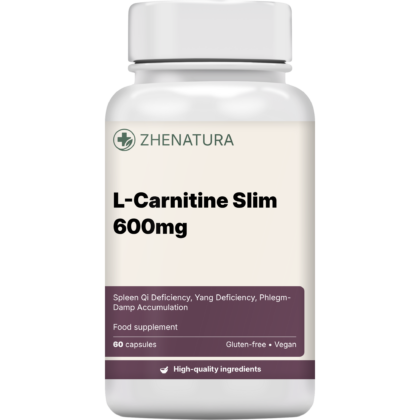
Zuǒ xuán ròu jiǎn
L-Carnitine – Fatty acid transporter for energy, performance, and recovery
L-carnitine is a naturally occurring compound that plays an essential role in energy production by transporting long-chain fatty acids into the mitochondria, where they are burned to generate ATP. In dietary supplements, L-carnitine is mainly used to support fat metabolism, physical performance, endurance, and recovery, although research on athletic performance is not fully consistent across studies.
Characteristics, origin, and composition
About 98% of the body’s L-carnitine stores are found in skeletal muscle, with much smaller amounts in the liver and blood. The body can synthesize carnitine on its own, but it is also obtained through diet, and some sources note that older adults, vegetarians, and vegans may want to pay attention to intake or precursor availability. Its main function is highly specific: L-carnitine is required to carry long-chain fatty acids across the inner mitochondrial membrane so they can undergo beta-oxidation and be turned into metabolic energy. Some sources also describe antioxidant-related effects, including support for cell protection and membrane stability.
A useful distinction is that standard L-carnitine is more often linked to energy metabolism and exercise support, while acetyl-L-carnitine is more often associated with brain function and cognitive support.
Use in dietary supplements
L-carnitine is commonly used:
-
For energy and fat metabolism, because it directly supports the transport and oxidation of fatty acids inside the cell.
-
In sports formulas, because it may help with recovery, fatigue reduction, oxygen delivery, and reduced lactic acid buildup, though findings remain mixed.
-
In cardiovascular support products, because some studies suggest possible effects on blood pressure and inflammatory processes associated with heart health.
-
In cognitive products when acetyl-L-carnitine is used, since that form is more often linked with concentration, memory, and mood support.
Everyday use and well-being
Dosage depends on the form, but a common supplemental range for L-carnitine is about 500 to 2000 mg per day. For acetyl-L-carnitine, sources mention other ranges such as 600 to 2500 mg per day, while L-carnitine L-tartrate is more commonly used in sports products. Another source recommends around 400 mg daily taken half an hour before a meal, which shows that guidance can vary by product and intended use. Overall, daily intakes up to 2 grams are commonly described as safe and effective in standard supplement use.